Prescott College Hosted the 2025 EcoLeague Retreat
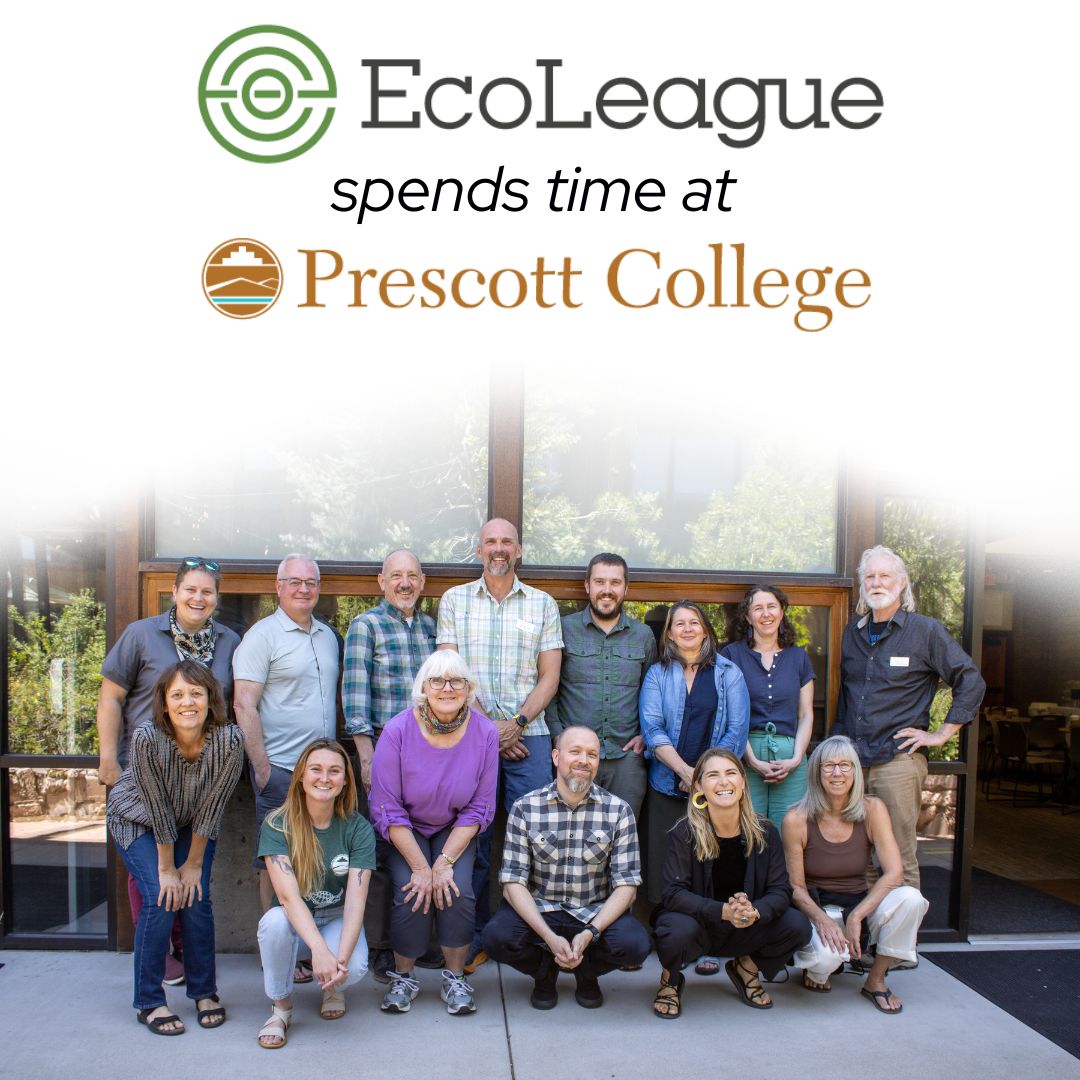
Prescott College welcomed representatives from EcoLeague to campus for their annual retreat from Wednesday June 11 through Thursday, June 12, 2025. The EcoLeague is a consortium of six liberal arts colleges dedicated to environmental stewardship, social change, and educating students to build a sustainable future.
Members from each of the six EcoLeague colleges were represented:
- Alaska Pacific University:- Anchorage, AK
- College of the Atlantic – Bar Harbor, ME
- Dickinson College – Carlisle, PA
- New College of Florida – Sarasota, FL
- Prescott College – Prescott, AZ
- St. Lawrence University – Canton, NY
During the retreat, attendees used their time together to envision the next phase of sustainability education, operations, and facilities management on the consortium’s various campuses and reflect on the lessons learned, experiences, and benefits of being a member of EcoLeague.
For more information: https://prescott.edu/prescott-college-to-host-ecoleague-consortium-retreat-june-11-12-2025/
St. Lawrence University joins the EcoLeague!
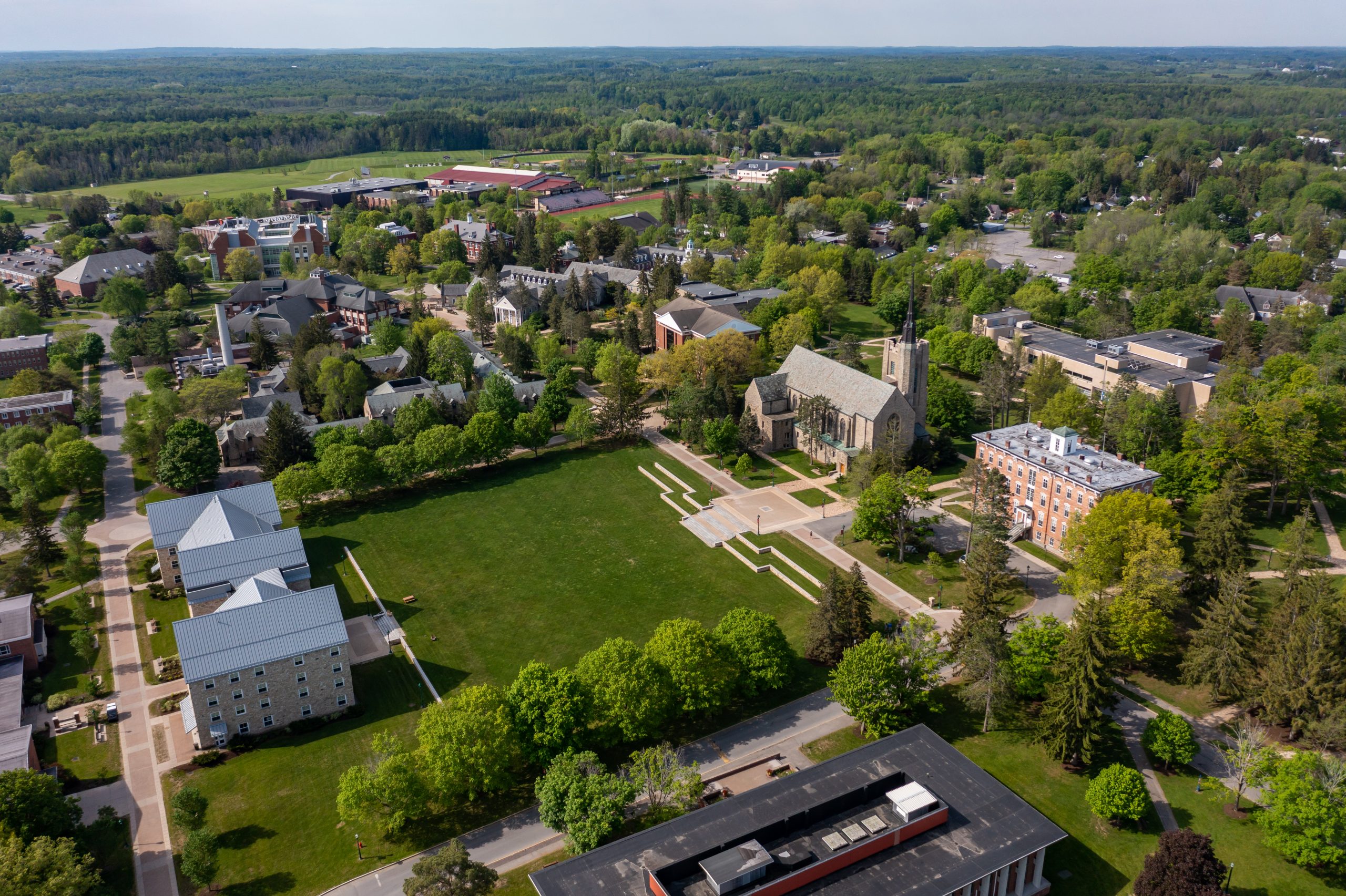
St. Lawrence University in Canton, NY, recently joined the EcoLeague, a consortium of liberal arts colleges and universities dedicated to ecologically focused education and research as well as modeling sustainability through their operations and facilities.
Currently coordinated by Dickinson College in Pennsylvania, the EcoLeague consortium includes colleges and universities across the United States: Alaska Pacific University in Anchorage, AK; College of the Atlantic in Bar Harbor, ME; Dickinson College in Carlisle, PA; New College of Florida in Sarasota, FL; and Prescott College in Prescott, AZ.
Neil Leary, Director of Dickinson College’s Center for Sustainability Education: “St. Lawrence University is an excellent fit for the EcoLeague consortium. As an exceptional liberal arts college with strengths in experiential and environmental education, they offer students at all the member colleges opportunities for high-impact learning through the EcoLeague student exchange program. We look forward to sending our students to study at St Lawrence and eagerly await welcoming their students on our campuses.”
St. Lawrence University has long offered a wide array of environmentally themed courses across the disciplines, outdoor leadership experiences, and unique experiential learning opportunities focused on the North Country region of New York, including the Adirondacks and the St. Lawrence watershed, as well as east Africa (through the Kenya Semester Program or shorter-term summer courses), and the neotropics.
St. Lawrence recently inaugurated the Center for the Environment, which seeks to empower the next generation of leaders to develop the skills necessary—through education, advocacy, and action—to be agents of change in their communities, the region, and the world. The university has an environmental literacy requirement for all students, and there are over 70 courses across the curriculum designed to meet the associated learning goals. Many first-year program offerings focus on topics of sustainability or environmental justice. With the launch of the Center for the Environment in 2024 as a major component of the institution’s strategic framework, it is the university’s goal to provide expanded skills-based, leadership and career-focused opportunities related to the environment, and to further develop and leverage robust connections to alumni and employers in environment-related fields – on and off campus.
Dr. Diane Husic, Director of St. Lawrence University’s Center for the Environment: “I have long been a proponent of collaborations and, thus, I am delighted about St. Lawrence joining the EcoLeague. This will provide exciting opportunities for St. Lawrence students and faculty to learn from others and to forge new scholarly partnerships.”
St. Lawrence completed a robust application process that included a report documenting its academic programs and commitment to sustainability and several conversations with current EcoLeague leadership and members.
St. Lawrence’s participation adds new experiences for their students and faculty and enhances the current consortium’s offerings for students, faculty, staff, and administrators.
Dr. Diane Husic, Director of St. Lawrence University’s Center for the Environment: “St. Lawrence students boldly seek opportunities for off-campus study and the student exchange component of the EcoLeague will provide them with new choices to study in a range of ecosystems across the country. We are also excited to welcome students from other consortium institutions to participate in experiential-learning opportunities in the wonderful North Country.”
St. Lawrence’s 1,000-acre campus includes the Living Lab property and Wachtmeister Field Station, which are adjacent to the main campus. The university runs an Adirondack Semester at a Yurt Village within the Adirondacks and owns the Canaras Conference Center – a historical lodge and cabins on Saranac Lake. Students throughout the EcoLeague will have easy access to the vast Adirondack Park, which includes glacial-carved geology, high peaks, the largest contiguous forest east of the Mississippi, more than 2,000 miles of hiking trails, over 3,000 lakes and ponds, and 1,200 miles of rivers. The St. Lawrence Seaway is about 30 minutes away from campus and is connected to the town of Canton via the Grasse River. St. Lawrence also owns a compound in Nairobi used for the Kenya Semester Program and summer courses which would be open to EcoLeague students.
Brady McCartney, Consortium Director of the EcoLeague: “I am excited to welcome St. Lawrence University to the EcoLeague as the consortium begins its third decade of leading environmental and sustainability education efforts in bioregions throughout the U.S. St. Lawrence has a demonstrated commitment to understanding and addressing environmental and sustainability challenges by threading environmental literacy throughout the curriculum and providing its students with outdoor education, green internship fellowships, and innovation grants opportunities. The EcoLeague consortium and our member colleges will benefit greatly from our new partnership with St. Lawrence’s students, faculty, staff, and administrators inside and outside of the classroom.”
EcoLeague member, Northland College, to close at the end of the 2024-25 academic year.
On February 19, 2025, EcoLeague member Northland college announced:
“The Northland College Board of Trustees today voted unanimously to close the College at the end of the 2024–25 academic year. Founded in Wisconsin in 1892, Northland was the first US college to fully integrate an environmental focus with its liberal arts curriculum. Located on the south shore of Lake Superior, surrounded by northern forests, Northland College inspired its students to explore the fundamental interconnections between nature, place and people.
‘Despite the collaborative efforts of the entire Northland family, we no longer have the resources needed to navigate the economic and demographic storms endangering small, liberal arts institutions today,’ said Ted Bristol, Chair of the Northland College Board of Trustees. ‘With declining enrollment and soaring costs, it takes more to operate the College than we raise in tuition. Even after enacting aggressive measures to cut costs and raise revenues, Northland College has no sustainable path forward.'”
This is unfortunate news for the Northland and EcoLeague communities. We wish Northland’s students, staff, faculty, alums, and community well. The consortium and its remaining members will support Northland in whatever manner possible during this time of transition.
EcoLeague member College of the Atlantic participates in “Mapping Ocean Stories,” a community-engaged science project to grow resilience against climate change
Mapping Ocean Stories, a long-term, community-engaged science project to grow resilience against climate change along Maine’s working waterfront, has received $200,000 in grant funding from the Maine Community Foundation. The project engages multiple College of the Atlantic faculty members, students, and community stakeholders.
The project, entitled Mapping Ocean Stories (MOS), utilizes the work of students, staff, faculty, fishermen, and other community members along with connections to partner organizations to build a useful resource that coalesces complex and nuanced information gathered from interviews with local stakeholders. Project organizers, including computer science professor Laurie Baker, history professor Todd Little-Siebold, COA coastal community engagement program lead and researcher Galen Koch of Maine Sound + Story, and Natalie Springuel ’91 of Maine Sea Grant, intend to make the collection accessible to policy makers and community leaders facing critical decisions around shifting ocean resources due to climate change.
For more details: https://www.coa.edu/live/news/2022-project-supports-climate-change-resilience
EcoLeague member Dickinson Joins Large-Scale Solar Project, Supporting Commitment to Sustainability
Dickinson and eight other colleges and universities in North Carolina and Pennsylvania are joining forces to bring an innovative, large-scale solar facility online in western Kentucky. By collaborating on this Power Purchase Agreement (PPA), Davidson College, Dickinson College, Elon University, Haverford College, Lafayette College, Lehigh University, Muhlenberg College, Swarthmore College and Wake Forest University are accessing the benefits of renewable energy through a deal typically only feasible for large customers.
“It’s really exciting to be a part of this project,” says Ken Shultes ’89, associate vice president for sustainability and facilities planning at Dickinson. “When combining this project with our 3-megawatt (MW) Solar Field, we are mitigating 100% of our Scope 2 carbon emissions.”
Guided by Coho, an ERM Group Company, the institutions are working with NextEra Energy Resources, the world’s largest generator of renewable energy from the wind and sun, and a world leader in battery energy storage. The consortium is supporting the Sebree Solar II project through a PPA that entails purchasing energy for 20 years. The Sebree Solar II project is set to begin construction in early 2025 and commence commercial operation by the end of 2026. The solar site is projected to provide enough energy to annually power more than 24,000 homes when complete.
The solar facility will be located near the town of Robards, Kentucky, near the Ohio River. The Sebree Solar II project will offer considerable environmental benefits as the project will generate up to 150 MW of clean, renewable energy. Over its 30-year lifespan, the solar site will contribute approximately $12 million in additional tax revenue to Henderson County which can be used for roads, schools and other public services.
While electricity generated by the Sebree Solar II project cannot be transmitted directly to the consortium campuses because of distance, the benefits of investing in new additional renewable energy will still be transferred to the schools. Dickinson will be paying for an amount of energy equal to approximately 75% percent of the electricity used by its campus, with the remainder being satisfied by the college’s 3 MW Solar Field. In exchange, Dickinson will receive renewable energy credits, which can be used to account for greenhouse gas emissions related to purchased electricity.
Notably, Dickinson was one of the first 10 colleges in the country to achieve neutrality. Moving forward, its focus is on reducing reliance on offsets, and more generally to continue to introduce operational sustainability initiatives as learning opportunities for students. Dickinson will receive access to data from the Sebree Solar II project for classroom use, as well as campus speaking engagements, site visits and student internships.
“We are pleased to work with Dickinson and the other institutions to help them achieve their sustainability goals,” said Anthony Pedroni, vice president, renewable development and M&A NextEra Energy Resources. “This solar energy project will generate homegrown energy and provide millions of dollars in additional tax revenue to Henderson County over the life of the project.”
Reposted from https://www.dickinson.edu/news/article/5756/
Worldwide Climate and Justice Education Week, APRIL 1-8, 2024
From EcoLeague consortium member Dickinson College:
Join with fellow Dickinsonians to educate yourself about climate change during Make Climate a Class @ Dickinson, April 1 – 8. Make Climate a Class @ Dickinson is part of the Worldwide Climate and Justice Education Week, an event that will engage thousands of students worldwide in a focused week of learning at scores of colleges, universities, and k-12 schools in 50+ countries.
During the period April 1 through 8, ten Dickinson faculty members are making climate change a focus of one of their classes and several are opening their climate-focused class to visitors. Participating courses include Arctic studies, physics of global warming and renewable energies, health studies, American environmental history, African government and politics, the Middle East since 1750, and gastronomy and health in the Basque country.
For the schedule of classes, visit https://www.dickinson.edu/info/20052/sustainability/4488/make_climate_a_class
Please register (https://docs.google.com/forms/d/e/1FAIpQLSc-tAN_z8F-cbhjDq01jze7Ywk7pVGCswIgoJimVGx_7XFpTA/viewform) in advance for any classes that you want to visit.
EcoLeague member, Dickinson College, to Host Campus and Community Workshop on Climate Resilience
Event Aims To Foster Collaboration And Discussion On Climate Risks, Resilience Strategies And Actionable Priorities
Dickinson will host an interactive event on climate risks and responses in Cumberland County. The Campus & Community Workshop on Climate Resilience will take place Friday, Dec. 15, from 2-5 p.m. in the Allison Hall Community Room. It is free and open to the public. All participants will be entered into a drawing for door prizes, and snacks and beverages will be served. The registration deadline is Dec. 12, when all participants will receive an email with the program and additional information. Registration can be completed online.
The collaborative workshop, led by students in the Baird Sustainability Fellows program, aims to foster collaboration and discussion on climate risks, resilience strategies and actionable priorities in the region. In the face of escalating climate challenges, the workshop provides a platform for residents, businesses and other stakeholders to collectively address the impact of severe weather on health, the economy, infrastructure, agriculture and the environment. By incorporating community input, the event seeks to develop thoughtful plans that mitigate risks and build resilience.
Dickinson is a noted leader in sustainability. For the second year in a row, Dickinson has earned the top position among baccalaureate institutions in the prestigious Sustainable Campus Index, a publication of the Association for the Advancement of Sustainability in Higher Education (AASHE). Newsweek recently named Dickinson one among “Seven of the Greenest College Campuses in the U.S.” The Princeton Review ranked the college fifth in the nation on its list of “Top 50 Green Colleges” and named the institution to its annual “Green Honor Roll.” Other sustainability achievements include being one of the first 10 colleges in the U.S. to reach carbon neutrality and joining the Second Nature Climate Leadership Resilience Commitment.
Originally published by Dickinson College. Written by Craig Layne.
Students at Dickinson College, EcoLeague member, Witness Innovation at Work at COP28
STUDENTS TRAVEL TO DUBAI THROUGH GLOBAL-ED PARTNERSHIP
Determination surged through the first days of the United Nations’ 28th annual Conference of the Parties (COP). And two Dickinson students were there in Dubai to see the wheels of progress in motion.
The COP draws together some of the world’s leading decisionmakers, scientists, activists, government officials and thought leaders to discuss pressing challenges posed by climate change and consider next steps. With funding through a grant awarded by the Stevens Institute and in partnership with the American University of Sharjah (AUS), Dickinson sent Heather Johnson ’25 (environmental studies, political science) and Georgia Mugisha ’26 (international studies, economics) to Dubai to attend the opening days of COP28.
“This experience provided real-world connections and applications of our work to demonstrate the interdependence of sustainability and global education and provided a platform for our students to experience the challenges and solutions surrounding the global climate crisis,” says Lindsey Lyons, Dickinson’s director of sustainability learning. “Students could apply their Dickinson education to addressing some of the world’s most pressing needs while exploring the culture of Dubai, campus life at AUS and global partnerships focused on sustainable solutions.”
Johnson and Mugisha were selected through an application process that centered on interviews with faculty. Once in Dubai, they resided at the local university as part of a U.S. student cohort.
The cohort took part in two full days of COP sessions, exploring sites and attending talks. They observed as member nations promised to provide aid to poor countries struggling with the effects of a warming planet and pledged to dramatically cut methane production in the months and years to come. “It meant a lot to me to get to see firsthand all the super creative and innovative efforts of so many different nations and individuals,” says Mugisha.
The students also explored their host country’s culture. They learned about traditional Emirati life during a tour of Dubai’s oldest neighborhood and sampled regional street food at a bustling marketplace. During their final evening they visited the famed Dubai Mall and dined under the bright lights of the Burj Khalifa skyscraper.
“I learned that nothing beats real life experiences and getting to see the real implications of what I’ve been studying,” says Mugisha, who’s taking two courses this semester with major sustainability components—one of which includes close study of UN Sustainable Development Goals. “My understanding of climate change and exposure to what’s being done about it around the world has also grown so much.”
The opportunity was also a perfect fit for Johnson, who’s focusing on the Middle East, the energy transition, GIS and American foreign policy in her classes this fall. She even was able to meet American University of Sharjah students who’d partnered with her GIS class on a project.
“I learned so much about UAE culture and history, but mainly, I learned that there are so many people who are fighting the same fight I am,” says Johnson, who marked her first overseas trip at the COP. “It was comforting to see how many people truly care about the environment and justice and are figuring out a way that we can reach environmental goals.”
Originally posted by Dickinson College under the title: Catalyst for Change: Students Witness Innovation at Work at COP28.
EcoLeague member, Prescott College, co-hosts “Climate Talks for Everyone” speaker series.
The “Climate Talks for Everyone” speaker series is co-sponsored with Fridays for Future USA, Prescott College, the Northern Arizona Climate Change Alliance, Elders Climate Action, and many other groups. Please join in these exciting zoom talks with climate activists fully engaged in the climate movement. They are on zoom with the link supplied after you RSVP.
The next talk: Climate Refugees and Arizona’s Future
Presenter: Prof. Stefan Sommer, NAZCCA Activist, NAZCCA Board
Saturday, 16 December, 2 PM Arizona Time, 2 pm CT, 4 PM ET, 12 pm AKST
Prior and future talks can be reviewed at this link.
EcoLeague Expands Networks as Faculty Share Research Initiatives
Between annual EcoLeague summer retreats and faculty information sessions, EcoLeague community members are becoming increasingly well versed in each other’s programs, which rest at the forefront of sustainability studies and environmental and agricultural best practices. Perhaps less well-known,
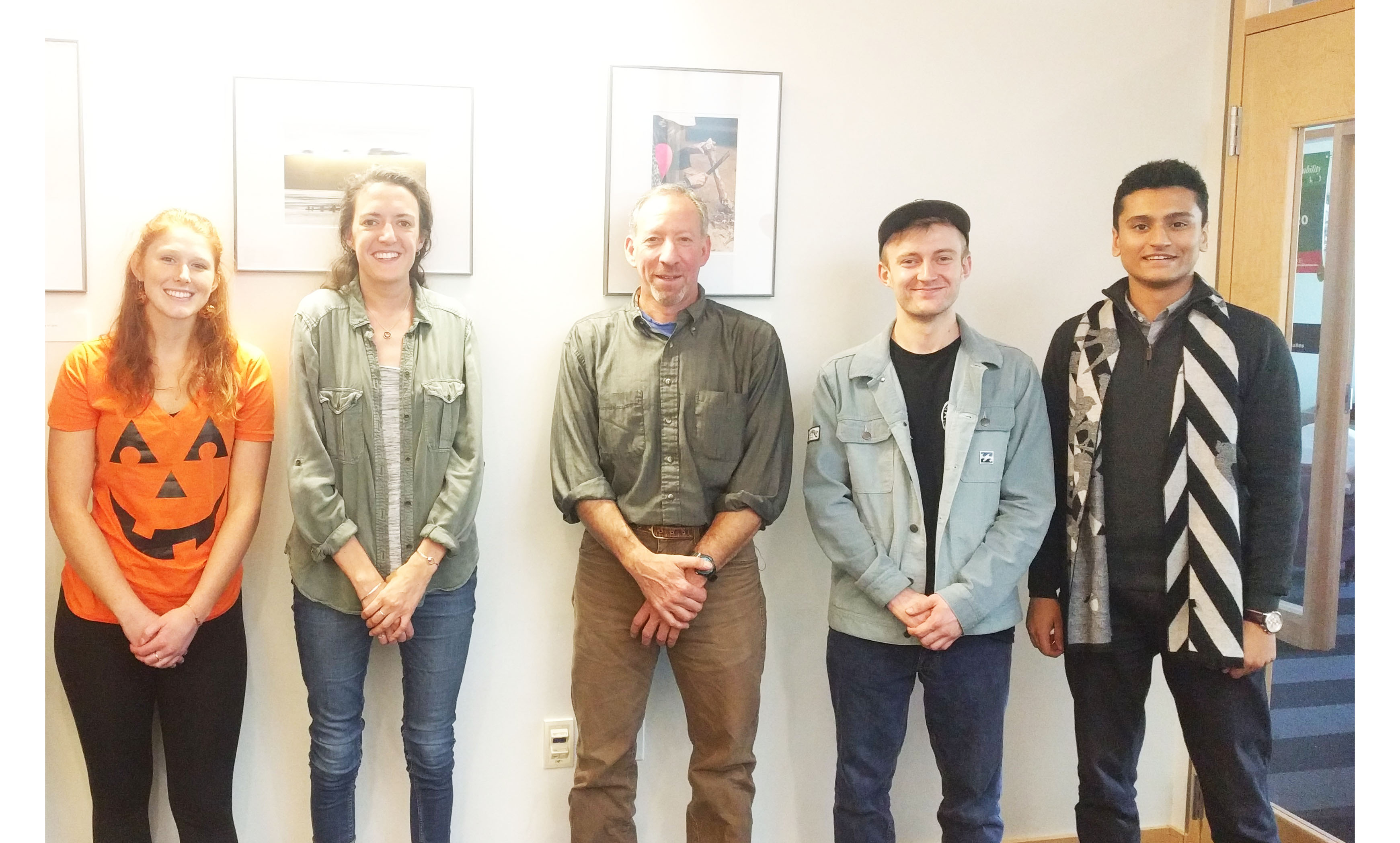
Steve Rubinstein with Dickinson students
until recently, are some of the local research resources for social scientists like the archives of the Carlisle Indian Industrial School, situated less than two miles from the Dickinson College campus in central Pennsylvania. Recent efforts to increase faculty collaboration across the consortium have furthered the consortium’s goal of sharing resources, knowledge, and opportunities for both students and faculty. With the help of an Andrew W. Mellon research grant, Dickinson sociology professor Susan Rose has embarked on a multi-year project to digitize the Carlisle Indian School’s vast archives and to share these resources with the public. Likewise, Alaska Pacific University professor of outdoor education, Steve Rubinstein, traveled to Dickinson College in Carlisle, PA, to exchange ideas with faculty in environmental studies and education.
Founded in 1879 as part of the United States government’s efforts to assimilate Native American youth populations into American culture, the Carlisle Indian School raises complex questions about American imperial “civilizing” projects and attempts to mollify indigenous populations. The site, currently managed by the United States Army War College, also houses controversial burial grounds for Native Americans who attended the school. Of interest to anthropologists, historians, sociologists, archaeologists, and scholars of indigenous studies, the archives of the Carlisle Indian School indeed prove fertile research ground in both figurative and literal terms.
Accompanied by Dickinson College archivist Jim Gerencser and Carlisle Indian Industrial School website creator Barbara Landis, Professor Rose travelled west in spring 2018 to meet with indigenous communities and disseminate information about the project with interested colleges and museums. The trip offered multiple opportunities for faculty collaboration and community engagement across the EcoLeague consortium, as Professor Rose’s group made visits with EcoLeague partners Northland College, in Ashland, Wisconsin and Prescott College, in Prescott Arizona, to coordinate with faculty and students. Rose teamed up with the program chair of Prescott’s Masters in Social Justice and Community Organizing, Ernesto Mireles, to bring Masters students in his course on indigenous communities and land rights to a film screening of The Lost Ones: The Long Journey Home, at the nearby Heard Museum in Phoenix.
“I was impressed with the people we met and the passion they had,” said Rose after meeting with Prescott students and faculty.
With help from Northland College Associate Professor of Natural Resources, Sarah Johnson, Rose’s team linked up with Assistant Professors of Native American Studies Emily Macgillivray and Kyle Bladow and their Indian Museum Studies course. Macgillivray and Bladow organized a ferry outing with their class to nearby Madeline Island Museum, with exhibits dedicated to Native American artists and women’s work, while two Northland students presented their own exhibit on the Carlisle Indian School. Before Rose and company left Ashland, WI, Northland helped organize a community meeting including members of local indigenous groups. We had a really productive visit,” Rose recounted. “These were some of the most engaged faculty we’ve seen, and it worked out great!”
The EcoLeague also supported APU professor Steve Rubinstein’s tour of the Dickinson campus where he shared expertise on environmental and outdoor education with Dickinson students and faculty in Fall 2018. Students learned about APU’s Master of Science in Outdoor and Environmental Education. Over the past 10 years, Rubinstein has been building the outdoor education program at the 800-acre farm donated by a trailblazer of women entrepreneurs in farming, Board of Trustee Louise Kellogg. Rubinstein has creatively used APU’s Kellogg campus in Palmer, AK as a canvas on which to “paint sustainability.” Efforts include curricular design for place-based environmental education that integrates community elders and targets Alaska’s relatively high population of home-schooled students who supplement home study with outdoor learning led by APU’s student teachers at APU’s Kellogg Field School.
Rubinstein also toured the Dickinson College Farm with farm director Matt Steiman to compare techniques across bio-regions and met with student interns from the farm and Dickinson’s Center for Sustainability Education. Students learned about Alaska’s specific challenges to develop heat-efficient and environmentally sustainable homes and structures, as well as the need for self-contained water systems for coastal villages that may need to relocate in future due to climate change. Sharing a breadth of knowledge about careers in outdoor education, environmental studies and sustainable living, Rubinstein advised students to “get a lot of diversity of experience […] and to be able to articulate it well for whoever you want to work for.”
Plans for expanding EcoLeague networks even further are already in the works, as Rose is targeting a summer 2020 trip to Alaska Pacific University. The Carlisle-based group has discovered that over 130 Indian young people from Alaska attended the Carlisle Indian School. Rose is looking to team up with APU faculty and students, and meet with Alaskan indigenous communities about their archival work.